
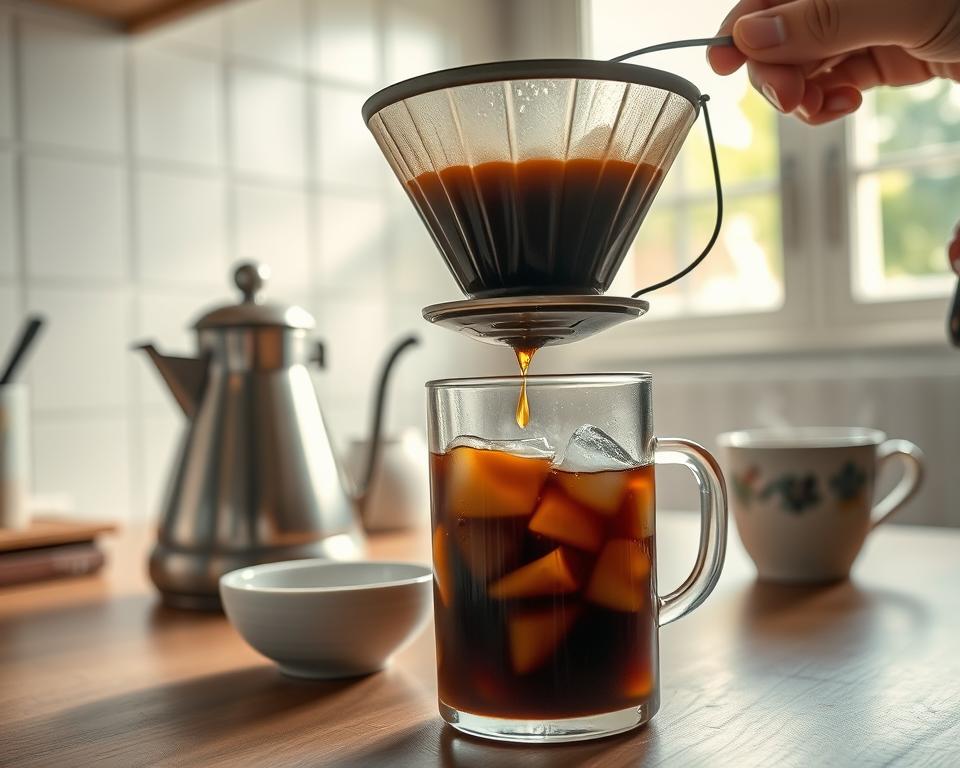
Welcome to the world of cà phê sữa đá, a favorite drink loved by many. It mixes strong espresso with sweetened condensed milk and ice. This combo is now a hit in trendy cafes in America, and you can make it at home too.
This vietnamese coffee recipe is easy to make. In just 10 minutes, you can have four servings ready. Each serving has about 129 calories, offering a perfect mix of bitter and sweet.
Whether you use a traditional phin filter or a drip maker, you can make this drink. You only need dark roast grounds, sweetened condensed milk, water, and ice. These simple ingredients bring cafe-quality refreshment right to your home.
Key Takeaways
- This recipe takes only 10 minutes total and serves 4 people with 129 calories per serving
- You need just four simple ingredients: dark roast grounds, sweetened condensed milk, water, and ice cubes
- Traditional preparation uses a phin filter, but standard brewing methods work perfectly too
- The signature flavor comes from combining strong, bold brewed grounds with creamy condensed milk
- This beloved Southeast Asian drink has become popular in mainstream American cafes and is easy to recreate at home
What Makes Vietnamese Iced Coffee Special
Vietnamese iced coffee is loved for its unique taste and smooth texture. It’s different from regular iced coffee. The secret is in the ingredients and the special brewing method passed down through generations.
This coffee uses a metal filter and certain beans. It’s stronger, bolder, and more satisfying than most coffee shops offer.

The Bold, Distinctive Flavor Profile
Traditional Vietnamese coffee is intense. It starts with robusta coffee beans, unlike the Arabica beans used in Western coffee. Robusta beans have almost twice the caffeine and a stronger taste.
These beans give the coffee earthy, chocolatey notes and a pleasant bitterness. The slow drip method through the phin filter extracts all the flavor from the grounds. This makes the coffee dark, rich, and robust.
The brewing process enhances the flavor. Hot water slowly passes through the grounds, pulling out deep tastes. It’s coffee to be savored, not gulped down quickly.
The Sweet and Creamy Texture
Sweetened condensed milk is key to traditional Vietnamese coffee. It’s an essential ingredient that changes the experience. The thick, creamy milk balances the coffee’s intensity.
Regular milk and sugar can’t match this. The condensed milk adds a velvety texture. When mixed with strong coffee and ice, it becomes smooth and luxurious.
This mix creates a balanced bittersweet flavor. The sweetness tames the coffee’s boldness without hiding its character. Each sip offers both the strength of coffee and the comfort of creamy sweetness.
A Cultural Coffee Tradition
Vietnamese coffee culture dates back to French colonial rule in the 19th century. The French introduced coffee, but the Vietnamese made it their own. They adapted the brewing method and flavor profile to create a unique coffee identity.
In Vietnam, coffee is a social ritual, not just a quick caffeine fix. People enjoy their coffee slowly in street-side cafés, often for hours. The phin filter reflects this philosophy—there’s no rushing the slow drip process.
The brewing method encourages slowing down and being present. Watching the coffee drip slowly is meditative. Making this coffee at home is more than just preparing a drink—it’s participating in a cherished tradition that spans generations and continents.
Ingredients You’ll Need for Vietnamese Iced Coffee
Quality ingredients make Vietnamese iced coffee special. You’ll need 3/4 cup of water, 2 tablespoons of sweetened condensed milk, 2 slightly rounded tablespoons of Vietnamese dark-roast ground coffee, and ice.

Each ingredient is key to the drink’s bold yet sweet taste. Let’s look at what makes each one special and where to find the best ones.
Selecting the Right Coffee Beans
While any dark roast coffee will do, authentic vietnamese coffee beans offer a unique flavor. Robusta beans, used in traditional Vietnamese coffee, have more caffeine and a stronger taste than Arabica beans.
Trung Nguyen Gourmet Blend is the top choice for home brewers. It’s smooth, with chocolate notes and no bitter taste. Its balanced flavor shines through, even with condensed milk.
If Trung Nguyen is hard to find, Café Du Monde Coffee with Chicory is a great substitute. It became popular among Vietnamese Americans after the Vietnam War. The chicory adds deep, earthy flavors like Robusta beans.
Trung Nguyen Premium Blend is oily, unlike the Gourmet version. Many prefer the Gourmet for cleaner brewing. Your coffee should be ground to a medium to coarse consistency for the best flavor in a Vietnamese phin filter.
Sweetened Condensed Milk Explained
Sweetened condensed milk is crucial in Vietnamese coffee. It has a long history in Southeast Asia, dating back to French colonial times. It was used because fresh dairy was scarce in the tropical climate.
This thick, sweet milk adds a creamy layer that balances the coffee’s strength. It also adds richness that regular milk and sugar can’t match.
Longevity Brand is the authentic Vietnamese choice, especially Longevity Gold with more cream. It’s creamy and has a buttery taste that enhances your coffee. Many Vietnamese families prefer this brand for the traditional flavor.
In the US, Eagle Brand is the sweetest and thickest option in most stores. It works well in Vietnamese iced coffee and is easy to find nationwide.
For vegan or low-sugar options, Nature’s Charm offers plant-based and sugar-free alternatives. These keep the creamy texture while fitting dietary needs.
Water and Ice Considerations
Water quality affects your coffee’s taste. Use filtered water to remove chlorine and minerals that can alter the coffee’s flavor. If your tap water tastes good, it’s fine for brewing.
Ice is crucial. You’ll need plenty of ice cubes because the hot coffee will melt a lot. Fill your glass well to keep your drink cold and at the right strength.
The melting ice creates the perfect strength and temperature. Don’t worry about the coffee getting watery—it’s part of the authentic recipe.
Optional Ingredients for Customization
Once you get the basic recipe down, you can add your own touches. Many people add extra condensed milk for a sweeter drink.
For an extra creamy version, mix equal parts condensed milk and regular milk. This adds more flavor and looks great when poured over the coffee.
Some like to add a pinch of cardamom or cinnamon to the coffee grounds. These spices complement the coffee’s chocolate notes without overpowering it.
Essential Equipment and Tools
You don’t need an expensive espresso machine for Vietnamese coffee. Just a few simple tools are enough. This brewing method is all about simplicity and accessibility. With the right gear, you can make café-quality drinks at home.
The key piece is the traditional Vietnamese coffee filter. We’ll also cover size options, alternatives, and the best serving ware. Let’s get started with what you need.
The Vietnamese Phin Filter Explained
A phin filter is a small metal drip filter for your glass. It’s the traditional way Vietnamese coffee has been brewed for generations. Most phins are made from aluminum or stainless steel, though you might find decorative ceramic versions.
The phin has three to four main parts. The brewing chamber holds your coffee grounds and hot water. The perforated base sits on your glass and supports all the other parts, sometimes integrated with the main chamber.
The filter plate rests on top of the coffee grounds, and some models include a screw mechanism attached to a center post. This lets you adjust how tightly the plate presses down, controlling the brew strength. The lid covers everything during brewing to maintain heat, then flips over afterward to catch any remaining drips.

One big advantage is that no paper filters are needed. This makes the phin an eco-friendly brewing method that produces zero waste beyond the coffee grounds themselves. You simply rinse it clean after each use.
Using a phin forces you to slow down and let the coffee drip at its own pace, which is part of the authentic experience.
Watching those dark drops fall into your glass is meditative. The slow drip rate isn’t a flaw—it’s a feature that extracts maximum flavor while encouraging you to pause and appreciate the moment.
Choosing the Right Phin Size
Phin filters come in several sizes to match different serving needs. Choosing the right phin filter depends on how much coffee you typically drink and whether you’re brewing for yourself or others.
The 4-ounce phin is the most common size you’ll find. It produces about the equivalent of a large espresso shot or lungo, perfect for a small cup of coffee. This single-serve size is ideal for individuals who prefer a concentrated, traditional serving.
A 6-ounce phin is the sweet spot for many coffee enthusiasts. It brews enough concentrate for one tall glass of iced coffee with plenty of room for ice. The 8-ounce version works similarly but gives you a slightly stronger or larger final drink.
Larger sizes are available for batch brewing. A 15-ounce phin can make two servings at once, while 40-ounce models are perfect for families or when entertaining guests. These family-style phins save time when you’re making multiple drinks.
You can buy phins online from Vietnamese coffee retailers or find them at most Vietnamese grocery stores. Whether you choose a model with a screw-down filter plate or a simple gravity-based design is personal preference—the screw-down offers more control, but it isn’t necessary for excellent results.
Alternative Brewing Equipment Options
Not everyone has immediate access to a traditional phin, and that’s perfectly okay. You can still make delicious Vietnamese-style coffee using other brewing equipment with slight adjustments to your technique.
A French press works well as an alternative to the phin brewing method. Use a coarser grind than you would for a phin, brew with less water to create a concentrated coffee, and press after about four to five minutes. The result won’t drip slowly like a phin, but it’ll produce that bold, strong flavor.
Standard drip coffee makers can also work in a pinch. The key is making a much stronger brew than usual—double your normal coffee grounds while using the same amount of water. This approximates the concentrated nature of Vietnamese coffee.
An espresso machine is another excellent option if you have one available. Pull a double or triple shot and dilute it slightly with hot water to match the volume you’d get from a phin. This method is actually quite close to the authentic concentration and body.
The main principle with any alternative brewing equipment is creating a strong, concentrated coffee that can stand up to the sweetened condensed milk and ice. Regular-strength American coffee will taste too diluted once you add the other components.
Recommended Glasses and Serving Ware
The right glassware enhances both the brewing process and the drinking experience. Since you’ll be pouring hot coffee directly into your glass, choosing appropriate vessels matters.
Heat-resistant glasses are essential for safety and durability. Regular thin glasses might crack when hot coffee hits them, especially if they’re cold from the refrigerator. Look for tempered glass or borosilicate glass that’s designed to handle temperature changes.
Tall glasses work best for serving Vietnamese iced coffee. Aim for 12 to 14-ounce capacity to accommodate both the coffee concentrate and plenty of ice. Clear glasses also let you appreciate the beautiful layering effect before stirring.
A long-handled spoon is incredibly helpful for stirring. The condensed milk settles at the bottom, and you need to reach all the way down to mix everything thoroughly. A regular teaspoon often isn’t long enough for tall glasses.
Some people prefer using traditional Vietnamese coffee glasses with a saucer underneath. These typically hold about 8 ounces and have a classic, authentic look. However, any heat-safe glass that meets the size requirements will work beautifully.
How to Brew Vietnamese Iced Coffee Step by Step
Making the perfect Vietnamese iced coffee takes patience and detail. It’s worth it for the rich flavor. The traditional method uses a phin filter, which takes a few minutes longer than drip coffee.
Start with water that’s just off the boil. It should be very hot but not boiling. Having everything ready makes the process smoother.
Add Sweetened Condensed Milk to Your Glass
Begin by adding 2 tablespoons of sweetened condensed milk to a heat-resistant glass. This sweet, creamy base is key to Vietnamese iced coffee. The milk will settle at the bottom, creating layers you’ll stir together later.
You can adjust the milk amount to your taste. Some like 3 tablespoons for sweetness, while others prefer 1 tablespoon for a stronger coffee taste. Make sure your glass can handle the hot coffee.
For a creamier drink, mix equal parts condensed milk and whole milk. This keeps the sweetness while making the texture lighter.
Assemble and Preheat Your Phin Filter
Get all your phin filter parts ready. The filter has a brewing chamber, a perforated plate, a gravity press, and a lid. Knowing how these work together is key for good extraction.
Preheat the phin by rinsing it with hot water. This step warms the metal and keeps the brewing temperature steady. Just pour hot water through the empty chamber, wait 10 seconds, and then discard it.
Put the phin on your glass with the condensed milk. The rim should fit snugly without wobbling. Now, add your coffee.

Add the Coffee Grounds
Remove the filter plate from the phin chamber. Sprinkle 2 slightly rounded tablespoons of coffee grounds evenly into the chamber. This careful distribution improves extraction quality.
Gently tap the sides of the phin to level the coffee grounds. You want a flat surface without gaps or mounds. Uneven grounds can cause channeling, where water bypasses the coffee.
Put the perforated filter plate back on top of the grounds. Press down gently but firmly. The compression should be snug but not too tight.
Bloom the Coffee with Hot Water
This step is crucial for great Vietnamese coffee. Pour 1 to 2 tablespoons of hot water over the grounds and wait about 30 seconds. This technique, known as coffee blooming, allows the grounds to release carbon dioxide and expand properly.
“Coffee blooming is the rapid release of carbon dioxide that occurs when hot water first contacts ground coffee. This process is essential for proper extraction and flavor development.”
Understanding coffee blooming explains why it’s so important. Roasted coffee releases carbon dioxide for about two weeks after roasting. Blooming lets this gas escape, allowing the hot water to absorb the rich flavors from the beans.
You’ll know blooming is working when you see the first drops of coffee drip into your glass. The grounds will look darker and slightly puffed up. This is your signal to proceed to the next step.
Complete the Brewing Process
Slowly pour the remaining hot water into the phin chamber—about 3/4 cup total. Add the water in a slow, circular motion to ensure even saturation of all the grounds. Avoid splashing or creating turbulence.
Place the lid on top of the phin filter. This cover retains heat during brewing and provides a clean surface to rest the filter on when you’re done. Now comes the hardest part—waiting patiently.
The brewing process typically takes between 4 and 7 minutes. This slow drip extraction is what creates the concentrated, robust flavor that defines Vietnamese iced coffee. Don’t try to speed it up by loosening the filter plate or shaking the phin.
With larger phin filters, you may need to add water in stages. Wait for some coffee to drip through before topping off with more hot water. The chamber can only hold so much liquid at once.
Stir and Serve Over Ice
Once the dripping slows to an occasional drop and nearly all the water has passed through, remove the phin filter from your glass. Use the lid upside-down as a coaster to catch any remaining drips and protect your counter. Your glass now contains dark, concentrated coffee sitting atop a layer of condensed milk.
Stir the mixture thoroughly until the condensed milk and coffee are completely combined. You’ll see the color transform from dark on top and light on bottom into a uniform caramel hue. This stirring is essential—poorly mixed coffee will taste bitter in some sips and overly sweet in others.
Now you have two serving options. You can add ice directly to this glass, or pour the mixture over ice in a separate tall glass. Many people prefer the second method because it provides better temperature control and presentation. Fill your serving glass with plenty of ice cubes before pouring.
Give everything a final stir after adding the ice. The hot coffee will melt some ice immediately, creating the perfect drinking temperature. Have extra ice nearby if you want your drink extra cold. Serve immediately while the flavors are at their peak.
Pro Tips for the Perfect Brew
Getting great Vietnamese iced coffee comes down to a few key steps. These tips will help you make delicious coffee every time. Whether it’s your first or hundredth cup, these details matter a lot.
Mastering the Coffee-to-Water Ratio
The first step is getting the coffee-to-water ratio right. For one serving, use 2 tablespoons of ground coffee to 3/4 cup (6 ounces) of water. This makes the coffee strong and concentrated, just like Vietnamese coffee.
This strong brew is key because it stands up to sweetened condensed milk and ice. If the ice melts, a weak brew gets diluted and loses its flavor.
You can tweak this ratio to your liking. For stronger coffee, add half a tablespoon more grounds or use 5 ounces of water. For milder coffee, use 1.5 tablespoons of coffee and keep the water at 3/4 cup.
When making more than one serving, keep the ratio the same. This ensures every cup tastes the same. Keep a measuring spoon handy until you get the hang of it.
Optimal Water Temperature
Temperature is crucial for extracting flavors. Your water should be just barely boiling, around 195-205°F (90-96°C).
Water that’s too hot pulls out too much from the coffee, making it bitter. Water that’s not hot enough doesn’t extract enough, leading to weak, sour coffee.
Use an electric kettle set to 200°F for the best results. If you’re using a regular kettle, boil the water, then let it cool for 30 seconds before pouring it over the coffee. This cools it down to the perfect temperature.

Controlling Your Brew Time
The perfect brewing time for Vietnamese coffee is 4-7 minutes. This time extracts flavors well without making the coffee bitter.
If the coffee drips too fast (under 3 minutes), it’s weak and watery. The coffee hasn’t had enough time to extract all the flavors.
If it takes longer than 7-8 minutes, the coffee gets too bitter. Too much time extracts bad compounds that make the coffee harsh.
Several things affect how fast the coffee drips. The grind size is the biggest factor, followed by how evenly the grounds are spread. Some people adjust the filter plate to slow down the drip, but the right grind usually works best.
Don’t rush the brewing process. Vietnamese coffee brewing is a slow, meditative experience that rewards patience with great flavor.
Adjusting Sweetness to Your Taste
The 2 tablespoons of sweetened condensed milk in most recipes is just a starting point. Your perfect sweetness level is up to you.
Some people prefer just 1 tablespoon for a less sweet coffee. This lets the coffee’s flavors shine while still adding creaminess.
Others like 3-4 tablespoons for a sweeter drink. As one coffee lover says, “go for that extra bit of sweetened condensed milk – it’s magical.”
You can also try mixing sweetened condensed milk with heavy cream for extra creaminess. Whisk them together and float this layer on top of your coffee for a luxurious touch.
Grind Size Recommendations
The best grind size for phin filter brewing is medium to coarse. The grind size affects how fast the coffee drips and how it tastes.
Grounds that are too fine clog the filter. This makes the coffee drip slowly or not at all, leading to bitter coffee.
Grounds that are too coarse let water drip too fast. This results in weak, sour coffee that lacks body.
The ideal grind is like coarse sand or slightly finer than French press. If you’re using pre-ground coffee, it’s probably already the right size.
If grinding at home, use a burr grinder for consistent size. Blade grinders make uneven grounds that extract unpredictably, making it hard to get consistent results.
| Brewing Factor | Recommended Setting | Impact on Flavor | Common Mistake |
|---|---|---|---|
| Coffee-to-Water Ratio | 2 tablespoons to 3/4 cup (6 oz) | Creates bold, concentrated strength | Using too little coffee, resulting in weak brew |
| Water Temperature | 195-205°F (90-96°C) | Ensures proper extraction without bitterness | Pouring boiling water directly, causing over-extraction |
| Brew Time | 4-7 minutes complete drip | Balances full flavor with smooth finish | Rushing the process or letting it drip too long |
| Condensed Milk | 2 tablespoons (adjust to taste) | Provides sweetness and creamy texture | Not using enough to balance coffee’s strength |
| Grind Size | Medium to coarse (like coarse sand) | Controls extraction speed and prevents clogging | Using espresso-fine grounds that block the filter |
Perfecting your brewing technique takes practice and trying different things. Don’t be afraid to make small changes until you find your perfect cup. Keep notes on what works best for you, and soon you’ll be brewing like a pro.
Delicious Vietnamese Coffee Variations to Try
Vietnamese coffee is not just one recipe. It has many creative variations that show the country’s coffee culture. Each one offers a unique taste, from bold to sweet. These styles reflect the tastes of different regions and people in Vietnam.
Whether you like your coffee strong or sweet, there’s a Vietnamese coffee for you. Let’s look at the most loved versions, enjoyed in Vietnam and around the world.
Traditional Cà Phê Sữa Đá
This is the classic version we’ve talked about. Cà Phê Sữa Đá means “iced milk coffee” and is Vietnam’s most iconic coffee.
The recipe is simple yet perfect. Strong coffee brewed through a phin filter mixes with sweetened condensed milk. Then, it’s poured over ice. This makes a drink that’s both refreshing and indulgent.
This variation is special because of its balance. The coffee’s flavor isn’t lost in the milk, and the sweetness doesn’t overpower it. This balance makes it the favorite in Vietnamese cafes everywhere.
Cà Phê Đen Đá (Vietnamese Black Iced Coffee)
For those who love the full flavor of Vietnamese coffee beans, Cà Phê Đen Đá is perfect. It skips the condensed milk.
The preparation is the same as the traditional version, but it’s served over ice without sweetener. Some add a bit of sugar, but traditionally, it’s enjoyed black.
This version lets you enjoy every flavor of the coffee beans. You get the chocolate notes, slight bitterness, and full-bodied flavor without any milk. It’s also a calorie-conscious option that doesn’t lose flavor for health.
Cà Phê Cốt Dừa (Coconut Coffee)
This tropical twist adds coconut milk or coconut cream for a different flavor. Cà Phê Cốt Dừa brings Vietnam’s coastal taste to your cup.
Some versions use coconut milk instead of sweetened condensed milk. Others add coconut flavor to the traditional recipe. Both ways give you that tropical sweetness and creamy texture.
The ice-blended version is a frozen, smoothie-like treat. It’s perfect for hot summer days. This version combines strong coffee, coconut milk, ice, and sometimes condensed milk in a blender. It’s like a Vietnamese coffee frappe with coconut.
Coconut coffee is the perfect mix of Vietnam’s coffee culture and tropical fruits.
Cà Phê Trứng (Egg Coffee) Iced
This unique Vietnamese specialty started in Hanoi during a milk shortage in the 1940s. The iced version is getting more popular lately.
To make it, whisk egg yolks with sweetened condensed milk and sometimes honey until fluffy. This custard-like foam sits on top of strong coffee and ice, creating layers of flavor and texture.
The result is rich and almost dessert-like. The egg cream adds a velvety smoothness that turns coffee into a treat. Don’t worry about raw eggs; when whisked with condensed milk, they make something special.
Bạc Xỉu (White Coffee)
Bạc Xỉu is a sweeter, milkier drink that’s less intense than classic Vietnamese coffee. It’s called “white coffee” because it’s lighter in color due to more milk.
This version uses more condensed milk and less coffee than the traditional one. The ratio might be 70% milk to 30% coffee, unlike the usual 50-50. This makes it a gentler introduction to Vietnamese coffee culture.
It’s great for those who find traditional Vietnamese coffee too strong or bitter. The milder flavor is perfect for afternoon sipping when you want something sweet but not too caffeinated.
| Variation Name | Main Ingredients | Sweetness Level | Coffee Intensity | Best For |
|---|---|---|---|---|
| Cà Phê Sữa Đá | Coffee, condensed milk, ice | Medium-Sweet | Strong | Classic experience seekers |
| Cà Phê Đen Đá | Coffee, ice | None to Low | Very Strong | Coffee purists |
| Cà Phê Cốt Dừa | Coffee, coconut milk, ice | Medium | Medium-Strong | Tropical flavor lovers |
| Cà Phê Trứng | Coffee, egg yolk, condensed milk, ice | Very Sweet | Strong | Dessert coffee enthusiasts |
| Bạc Xỉu | Coffee (less), condensed milk (more), ice | Very Sweet | Mild | Those preferring milder coffee |
Each of these Vietnamese coffee variations offers something unique to explore. Start with the traditional version to understand the foundation, then branch out to discover which style resonates with your personal preferences.
The wonderful thing about these variations is that they all use the same basic brewing technique with the phin filter. Once you master that method, experimenting with different styles becomes simple and enjoyable.
Common Mistakes and How to Avoid Them
Knowing common mistakes helps you make better condensed milk coffee. Many beginners face issues that stop them from getting the perfect taste. Most mistakes are easy to fix once you know what to look for.
These problems affect the taste, texture, and overall feel of your Vietnamese iced coffee. By learning to spot and fix these errors, you’ll make cafe-quality drinks at home every time.
Using Incorrect Grind Size
The grind size is the most common mistake beginners make. The size of your coffee’s particles affects how water flows and flavors are extracted.
If the grind is too fine, water drips slowly or stops. The phin filter gets clogged, and brewing takes 15 minutes or more. This makes the coffee bitter and harsh, even with sweetened condensed milk.
On the other hand, a grind that’s too coarse lets water flow too fast. This makes the coffee weak and sour, lacking the rich body Vietnamese coffee is known for. The drink tastes watery and disappointing.
The ideal grind is like coarse sand or slightly finer than French press. If you buy pre-ground Vietnamese coffee, it’s usually right. When grinding at home, adjust based on how quickly the coffee drips.
Brewing Too Quickly or Slowly
Getting the brew time right is key for balanced flavor. The sweet spot is between four and seven minutes for most phin filters. If your coffee brews outside this range, you need to make adjustments.
If your coffee finishes in under three minutes, the water is moving too fast. Try a slightly finer grind, add more coffee grounds, or tighten the filter plate if it has an adjustable screw-down design.
If brewing takes longer than eight to ten minutes, something’s blocking the flow. The grind might be too fine, you could be using too much coffee, or the filter plate may be too tight. Loosen the plate a bit or use a coarser grind to improve flow.
Remember, patience is part of the Vietnamese coffee ritual. Don’t rush the process by pouring water too fast or removing the phin filter early. Let gravity do its work.
Not Using Enough Condensed Milk
Vietnamese coffee is intensely strong and concentrated. It needs generous sweetened condensed milk to balance the bold flavor. Using too little milk makes the coffee too bitter and misses the creamy sweetness.
Many coffee lovers used to American-style coffee underestimate how much condensed milk Vietnamese coffee needs. Start with at least two tablespoons per serving. Many Vietnamese coffee fans use three or even four tablespoons.
Don’t be shy with the condensed milk. It’s not just a sweetener but a key part of the drink’s identity. The thick, sweet milk makes the powerful coffee smooth and indulgent. You can always adjust to taste, but start with more.
Adding Ice at the Wrong Time
Adding ice at the wrong time is a common problem for newcomers. Some beginners add ice before brewing starts, which causes issues as the ice melts during brewing.
When ice melts too soon, it dilutes the condensed milk before the coffee arrives. This makes the drink unbalanced, with separate layers of coffee, milk, and water.
The right way is to brew hot coffee directly into the glass with condensed milk, then stir well. Add ice after that. This ensures the coffee and milk mix well before chilling.
Keep extra ice ready because hot coffee melts ice fast. Your initial ice will melt a lot in the first minute. Adding more ice keeps the drink cool and at the right dilution.
Using Poor Quality Coffee Beans
The quality of your coffee beans greatly affects your Vietnamese iced coffee’s taste. Generic dark roast from the supermarket won’t give you the smooth, chocolatey notes and balanced flavor authentic Vietnamese coffee has.
Vietnamese coffee usually uses robusta beans or robusta-arabica blends roasted dark. These beans have specific flavors that go well with sweetened condensed milk. Poor quality beans taste harsh, burnt, or too bitter, no matter how you brew them.
Investing in proper Vietnamese coffee beans or quality alternatives like Café Du Monde makes a big difference. The smooth finish and lack of harsh acidity in great condensed milk coffee come from well-sourced, properly roasted beans.
When you can, choose recognized Vietnamese coffee brands. The authentic flavor is worth the slightly higher cost compared to supermarket options.
| Mistake | Problem It Creates | Quick Solution | Ideal Result |
|---|---|---|---|
| Grind Too Fine | Slow drip, bitter taste, clogged phin filter | Use coarser grind similar to coarse sand | 4-7 minute brew time with smooth flavor |
| Grind Too Coarse | Fast drip, weak and sour coffee | Use slightly finer grind, add more grounds | Rich, full-bodied coffee with proper strength |
| Insufficient Condensed Milk | Overwhelmingly bitter, unbalanced drink | Start with 2-3 tablespoons per serving | Sweet, creamy texture balancing coffee strength |
| Ice Added Too Early | Diluted condensed milk, separated layers | Add ice after brewing and stirring | Well-integrated, properly chilled beverage |
| Low Quality Beans | Harsh, burnt, or excessively bitter flavor | Use authentic Vietnamese coffee brands | Smooth, chocolatey notes with balanced taste |
By avoiding these common mistakes, you’ll make delicious Vietnamese iced coffee every time. Most brewing problems have simple fixes that greatly improve your results.
Recommended Coffee Brands and Where to Find Them
For amazing Vietnamese iced coffee, choose quality coffee brands. They should have bold, authentic flavor. Dark roast coffee works, but traditional Vietnamese beans give that special taste.
Many coffee brands are loved by Vietnamese coffee fans. Each brand has its own unique qualities that make the coffee experience real.
Vietnam’s Most Trusted Coffee Brand
Trung Nguyen Coffee is Vietnam’s best-selling coffee brand. It has over 800 coffee shops in Southeast Asia. Their quality and roasting methods are top-notch, making them a favorite for home brewers.
The Gourmet Blend from Trung Nguyen is a top pick for Vietnamese iced coffee. It’s smooth, with chocolate notes that pair well with sweetened condensed milk. It’s perfect for coffee lovers and newcomers alike.
The Premium Blend is for those who like bolder flavors. But, some find it too oily. If you prefer a heavier coffee, this might be your go-to.
The Vietnamese American Coffee Staple
Cafe du monde became a hit in the Vietnamese American community after the Vietnam War. It was a taste of home for millions of Vietnamese refugees in America. The coffee’s earthy flavor reminded them of their heritage.
The chicory in cafe du monde adds a deep, earthy taste. It’s not traditional Vietnamese, but it captures the essence of Vietnamese coffee. This made it a cultural bridge between two worlds.
Finding cafe du monde is easy. It’s in regular American grocery stores and supermarkets nationwide. It’s a great choice for anyone new to Vietnamese iced coffee.
Rising Vietnamese Coffee Brand
Highlands Coffee is another popular choice from Vietnam. It offers various blends for different tastes. Their quality control ensures every bag is consistent.
Highlands Coffee has grown internationally in recent years. It’s now easier to find online. This brand offers a true Vietnamese coffee experience with modern quality.
The Convenient Alternative
Café Bustelo is a good option when Vietnamese brands are hard to find. It’s a dark roast espresso-style coffee with bold flavor. It works well with sweetened condensed milk and ice.
If using whole beans, grind them finer than usual. Café Bustelo’s bold flavor and easy availability make it a reliable choice.
Smart Shopping for Vietnamese Coffee
Knowing where to buy Vietnamese coffee saves time and ensures quality. There are several reliable sources for authentic brands.
Vietnamese grocery stores have the best selection and freshest products. They know how to store coffee, ensuring freshness. Staff can help you choose based on your taste.
Online retailers specializing in Vietnamese coffee offer convenience. Companies like Nguyen Coffee Supply import directly and roast in Brooklyn, New York. They offer both arabica and robusta, plus blends. Buying directly from Vietnamese companies ensures freshness since they ship regularly.
| Where to Buy | Advantages | Best For | Price Range |
|---|---|---|---|
| Vietnamese Grocery Stores | Freshest selection, expert advice, authentic brands | Local shoppers wanting variety | $8-15 per pound |
| Online Vietnamese Retailers | Direct from roasters, specialty options, convenient delivery | Quality-focused buyers | $12-20 per pound |
| Amazon | Fast shipping, customer reviews, wide selection | Convenience seekers | $10-18 per pound |
| Asian Supermarkets | Multiple brands, competitive pricing, one-stop shopping | Budget-conscious buyers | $7-14 per pound |
| Specialty Coffee Shops | Curated selection, staff expertise, sample options | Coffee enthusiasts | $15-25 per pound |
Amazon is convenient with lots of customer reviews. But, always check seller ratings and product freshness before buying. Older stock can affect flavor.
The best Vietnamese coffee comes from roasters who understand traditional methods and source beans from Vietnamese farms.
Asian supermarkets offer a good middle ground. They have several Vietnamese coffee brands and other international products. You can find both ground coffee and whole beans at good prices.
Serving Ideas and Perfect Pairings
Traditional Vietnamese beverages like Vietnamese iced coffee are best enjoyed with care. It’s not just about brewing a cup. It’s about knowing when to drink it, what foods to pair it with, and how to present it.
Coffee is a social ritual in Vietnam, enjoyed slowly at street-side cafés. This approach makes a simple drink into a meaningful moment. Embracing these traditions shows why Vietnamese coffee is loved worldwide.
Best Times of Day to Enjoy
Coffee culture in Vietnam is different from what Americans are used to. Vietnamese people drink coffee all day, not just in the morning. This shows how coffee is a social and energizing part of Vietnamese life.
Morning hours are perfect for Vietnamese iced coffee as a breakfast drink. Its sweet, creamy flavor gives energy and satisfaction. Enjoy it with a light breakfast or on its own.
Afternoon refreshment is when this coffee shines. The strong caffeine and sweet condensed milk are a great pick-me-up. Vietnamese cafés are busiest between 2 PM and 5 PM.
Enjoying it in the evening is like having dessert. The sweetness is a treat. But, be careful of the caffeine if you’re sensitive at night.
Vietnamese iced coffee makes memorable entertaining experiences. Brewing it for guests makes any gathering special. The brewing process is a great conversation starter.
Vietnamese Pastries and Snacks That Pair Well
Choosing the right foods to go with your coffee makes the experience better. Traditional Vietnamese snacks offer great flavor and texture contrasts to the coffee.
- Bánh mì (Vietnamese sandwiches) are a savory match for a light meal
- Bánh bao (steamed buns) have soft, mild flavors that complement the coffee
- Bánh tiêu (hollow donuts) are classic coffee shop treats with a hint of sweetness
- Fresh spring rolls offer a light, refreshing contrast to the rich coffee
- Coconut or pandan waffles add interesting texture and tropical flavors
French-influenced options also pair well with Vietnamese coffee. Buttery croissants reflect Vietnam’s colonial history and add richness. Simple butter cookies and pastries let the coffee’s flavor shine.
The key is to choose foods that complement rather than compete with the coffee. Avoid sweet or spiced foods that might clash with the coffee’s taste.
Creating an Authentic Presentation
Presentation is key when serving Vietnamese iced coffee. It adds to the experience and honors the beverage’s cultural roots.
The phin filter can be shown on the glass for visual appeal. This approach makes brewing a table-side experience. It turns a kitchen task into a fun activity for everyone.
Clear glasses showcase the beautiful layers of coffee and milk before stirring. This makes the coffee look great on Instagram while staying true to Vietnamese style. The contrast of dark and light layers creates excitement for the first stir.
Some authentic cafés serve the coffee in a small glass with the phin on top. They also provide a separate tall glass filled with ice. This lets you control the temperature and dilution of your coffee.
Elevate your presentation with these traditional touches:
- Serve on a small tray or saucer to catch any drips
- Include a long spoon for stirring and sipping
- Provide a small plate of complementary snacks
- Use individual phins for each guest when entertaining
For gatherings, setting up multiple brewing stations creates a communal experience. Each guest gets their own phin to customize their coffee. This interactive approach sparks conversation and makes your coffee service memorable.
The authentic presentation honors Vietnamese coffee traditions while making your serving special. Whether it’s a quiet moment or a gathering with friends, these details turn Vietnamese iced coffee into a complete sensory experience.
Storage and Make-Ahead Options
Preparing Vietnamese iced coffee ahead of time makes it easier to enjoy. You can store it in ways that make mornings smoother. This turns making coffee into a quick habit.
Planning your coffee routine saves time in the morning. With a few tricks, you can assemble your drink in seconds.
Preparing Cold Brew Concentrate in Advance
Making cold brew concentrate is super convenient for the week. It’s smoother and less acidic than hot-brewed coffee. Many people love it for that reason.
Start by mixing 1 cup of coarsely ground Vietnamese coffee with 4 cups of cold water in a large jar. Stir gently to soak all grounds. Then, refrigerate for 12 to 24 hours.
Strain the concentrate through a fine-mesh sieve and a coffee filter. The result is a liquid gold that lasts up to two weeks in the fridge.
To serve, mix half a cup of concentrate with sweetened condensed milk over ice. It’s smoother than hot-brewed but still captures the essence of Vietnamese coffee.
Cold brew concentrate turns your morning into a quick assembly line.
How Long Brewed Coffee Stays Fresh
Freshness is key for enjoying Vietnamese iced coffee. Coffee brewed with a phin filter is best when served immediately, hot or over ice.
If you brew more than needed, store it in the fridge for up to 24 hours. Use an airtight container to keep flavors fresh, but some loss is expected.
Never leave brewed coffee at room temperature for more than 2 hours. After that, taste and quality decline, and bacteria can grow.
For the best taste, brew fresh each time or use cold brew for advance prep. The difference in taste between fresh and day-old coffee is clear.
Storing Condensed Milk Properly
Storing condensed milk right keeps your Vietnamese iced coffee sweet. Unopened cans stay good for months, just check the expiration date.
Once opened, move the milk to an airtight container or tightly cover the can. Refrigerated, it stays fresh for 2 to 3 weeks.
Many brands offer squeeze bottles for easy pouring and sealing. These bottles make coffee prep faster and cleaner.
Here’s a tip: mix equal parts sweetened condensed milk and regular milk in a small container. This blend lasts 2 to 3 days and is great for quick Vietnamese iced coffee.
| Condensed Milk Storage | Location | Duration | Best Practice |
|---|---|---|---|
| Unopened can | Pantry | Until expiration date | Store in cool, dry place |
| Opened can/container | Refrigerator | 2-3 weeks | Use airtight container |
| Milk topping mixture | Refrigerator | 2-3 days | Shake before each use |
| Squeeze bottle | Refrigerator | 2-3 weeks | Check seal after each use |
Making Coffee Ice Cubes
Freezing leftover coffee in ice cube trays is a smart trick. It makes coffee ice cubes that enhance your drink’s flavor.
These cubes melt slowly, adding more coffee flavor instead of diluting your drink. They’re perfect for those who love strong coffee from start to finish.
Once frozen, pop out the cubes and store them in a freezer bag for up to 3 months. Label the bag for freshness tracking.
Coffee ice cubes are great for extra coffee or a strong Vietnamese iced coffee. They’re also good in smoothies or coffee cocktails.
Use coffee ice cubes in your glass instead of regular ice. Add your condensed milk mixture and pour in coffee. As the cubes melt, the coffee flavor gets stronger.
Conclusion
Making homemade Vietnamese iced coffee is easier than you think. You only need four basic ingredients and about 10 minutes. The traditional phin filter gives an authentic taste, but you can start with what you already have.
The joy of Vietnamese coffee at home is more than just taste. It’s about taking time to enjoy the process. Watch the coffee drip, see the milk mix, and take that first sip.
Start with brands like Trung Nguyen or Café Du Monde for real flavor. Find your perfect sweetness level. Try new flavors like coconut or egg coffee once you get the hang of it. Make a big batch for guests or prep cold brew for quick mornings.
Your kitchen can now make café-quality drinks without the high cost. This guide has given you all you need to make this Vietnamese tradition at home. Get some sweetened condensed milk and Vietnamese coffee grounds next time you shop. Your homemade Vietnamese iced coffee is ready to bring a taste of Vietnam to your glass.